Tuesday, 22 April 2014

Har Herzl and The Biblical Zoo

הר הרצל


The week before Passover (and after Poland), we had two Tiyulim. In the morning we went to Har Herzl, where we learned about the 6 types of Zionism and about Herzls part in Zionism. 

Herzl was the 'Father of Zionism'. He outlined his vision for a Jewish state in his book 'Der Judenstaat', (The Jewish State) in 1896. The book describes the practical functions of a secular state, where the state would be westernized and an environment free from anti-Semitism.  Herzl came to terms with Zionism while reporting for his paper in Paris on the Dreyfus Affair, in which Captain Dreyfus was falsely accused of treason. Herzl came to realize the anti semitism, and that the Emancipation of the Jews, far from solving the Jewish problem, only aggravated it by creating severe tensions between the Jews and their neighbors in European society. In Herzl's view, the Jews had to consider themselves to be not only a religious body but also a nation capable of developing its own political institutions in a land of its own.  The first Zionist conference was held in Basle in 1897. 

Herzl died early at the age of 44, in Vienna, where he was buried.  In 1949, Herzl's remains were taken to Jerusalem where they were buried on a hill, which is now named Mount Herzl. Herzl was indirectly responsible for the establishment of the State of Israel and is acknowledged to be the State's founder. 

In 1949 Herzl's remains were taken to Jerusalem where they were buried on a hill, now called Mount Herzl. More than any other thinker and politician, Herzl was indirectly responsible for the emergence of the State of Israel and is acknowledged to be the State's true founder.

First Zionist conference

While we were at Har Herzl, there was a practice going on around Herzl's grave for the Yom Hazikaron ceremony, (remembrance of the Soldiers who have fallen). Thus, we weren't able to get close to Herzl's grave. We also went to the museum where we learned all about Herzl's life through the interactive videos. 

In the afternoon, we went to the Biblical Zoo as a Hebrew class tiyul. Our Hebrew teachers came too. My teacher came with her daughter Affik as well. We had an assignment to do while having some free time around the zoo. We had to pick an animal that we saw and write about its characteristics in Hebrew. We went during everyone else's Passover vacation so there were many camps and families there. 


Chimpanzee 


Giraffes in the zoo

Elephants in the zoo

Later that night we had free time in Emek Refaim and enjoyed some great bagels and ice cream!


Friday, 18 April 2014

Poland (April 1-April 6)

View of Warsaw from the plane

We went to bed at 8 pm Monday night, to get up at 1:15 to drive to the airport for Warsaw. We drove to Ben Gurion Airport and got there at 2:30. Once we checked in through security, we took a shuttle to the plane. It felt really weird getting on a plane with everyone during our program. The last time we were in the airport was when we were just meeting each other for the first time. The flight to Poland was 4.5 hours long. I slept the majority of the ride. 

Okopowa Cemetary (the graves pre Holocaust)

Day 1:


We arrived in Poland at 9:30 am, Tuesday morning. When I wasn't sleeping on the plane, I was thinking about what Poland was going to be like. I always imagined it Poland as an old and dreary country because of all the deaths and tragedies that occurred there. 

Okopowa Cemetary

Once we landed in Warsaw we went straight to the Okopowa cemetery. Many of the graves before the Holocaust were fitted to the peoples names and things that they enjoyed or were known for. Before the war they also had whether they were a Cohen or Levi on the stone. The people who were buried in another section in the cemetery that had perished in the Holocaust, weren't buried with much dignity to their names. 

Ghetto Heroes Trail

Me in front of the heroism monument


We sat in front of two monuments. One facing the road, and the other facing the newly built 'Museum of the history of Polish Jews'. The one facing the street is an example of unknowing what is going to happen next, whereas the monument facing the museum is an example of heroism. People who pushed throughout the entire time; carrying strength and hope to the atmosphere. They looked very familiar. We saw the copies of the monuments at Yad Vashem. 

Umschlagplatz

Umschlagplatz was a deportation camp for children and families. The ghetto police put people in the boxcars to take them somewhere else. We learned about Janusz Korczak who ran an orphanage and was killed at Umschlagplayz with his orphaned children. What people went through, throughout the Holocaust is completely unimaginable. We went for mincha at the Nozyk synagogue in Warsaw. It is one of two synogagues out of forty that survived (that the nazis didn't destroy).  It was a beautiful synagogue with vibrant chandeliers and stained glass windows with decorations on the walls. It was an orthodox synagogue. We had the Chief Rabbi of Poland speak to us about how he moved from the US to Poland and his experience with the Jewish community and people figuring out their Jewish heritage in Poland through their customs. The mincha we did at the synagogue brought a lot of ruach to this otherwise 'quiet and lonely' synagogue. We sang and danced. For dinner we walked down the street to a kosher restaurant. Who knew that there would be a Kosher restaurant in Poland, let alone in Warsaw. It was a great three course meal. We checked in at the Hotel and fell asleep right away after a tiring day. 

Day 2:

Tykochin

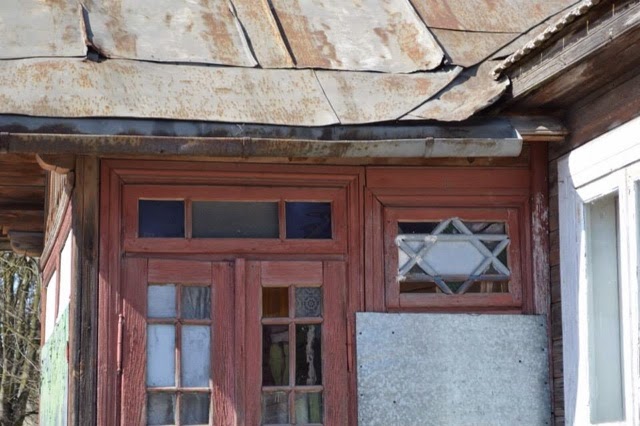
Magen David on a house in Tykochin

We went to the Tykochin synagogue. Is is now a museum showcasing talitot, Torahtot, and siddurs. We did Shacharit there. We sang and danced to מזמור לדוד after splitting apart for the Amidah. There is no Jewish community in Tykochin anymore. The Synagogue and cemetery are still there and many Magen Davjds are scattered around on buildings around the Shtetl. We walked to a cemetery where many of the Jews were buried. It wasn't kept very well and the stones were very dirty so the letters were unclear. 

Lupochowa Forest

Lupochowa forest

We stood in the Lupochowa forest while our teachers recited a testimony that was read at the Eichmann trial in Jerusalem. There were many people shot in this forest in one day. The people were both young and old. No one should live the misery of seeing anyone being killed or die.  There were many יזכור candles. Many Israeli flags were there too. They didn't get the chance to go to Eretz Israel. All you could hear was the wind blowing and the birds chirping. We stood in front of green gates forming a square. We said mourners Kaddish for all of those who perished. 
Treblinka

There wasn't much left of Treblinka. It was 500 hectares which was heavily interwoven with barbed wire. The nazis destroyed everything there and built a farm thinking that no one would find the site. There is now a memorial where the farm stood before. Hundreds of towns  where the people were from who were transported to Treblinka. People who got to Treblinka were sent either to the left or right. The people sent to the right were "the lucky ones", meaning a labour camp. While the people to the left were sent to the death camp. We had a reeks (closing ceremony) here. We all felt emotionally stressed and were all leaning on each other. We sang many songs of hope including Ani Meamim. 

Day 3:

Yeshivas Chochmei Lublin

Yeshivas Chochmei Lublin

Rabbi Meir Shapira who was the Rabbi of Lublin created the concept of 'Daf Yomi', which is learning one page of Talmud everyday. We carried this on where it all started in Yeshivas Chochmei Lublin. We studied Talmud with a partner on different topics around the topic of Passover. The Yeshiva is now a hotel called 'Hotel Ilan' and their slogan is carry on the tradition. This couldn't be a coincidence because this hotel kept the yeshiva as a museum on the top floor. 

Majdanek
This goes without saying; everything  seems unimaginable, yet it happend. It was real. The remainds of the buildings, survivors from different camps pass on their stories. There was a bunker that I went into filled with thousands of shoes. The tiny shoes that probably belonged to a baby. They were real people that were treated as if they were useless.  We were able to freely walk in and out of Majdanek , they went in and never came made it out. 


Krasnik Synagogue
We got to the Krasnik synagogue and entered a freezing cold room with nothing in it. To my surprise, we walked further into the building singing מה טובו and we saw a beautiful poster mounded onto the wall with the מה טובו prayer on the way to the main sanctuary. In the main sanctuary we saw where the ark would have been in the wall. We formed a circle and our counsellor, Sara shared an essay she wrote with us about her connection to the town of Krasnik. Her grandfather grew up in Krasnik and went to the Krasnik synagogue. It was the only place in the town that her grandfather had fond memories of. We lit 6 candles there and placed them where the ark would have been. We then sang Am Yisrael Chai!!  It made the synagogue come back to life again. 

Lezajsk
We went to the town of Lezajsk which is known for being an important Hassidic centre because of Rabbi Noam Elimalech who was the originator of the concept of Tzaddikism. We seperated into boys and girls. The boys went to the mikvah and we had a 'Seudat Amenim', where we wrote our own prayers and shared them. The concept is to say amen as many times as possible. We all joined up after to go the the Ohel of Tsaddik Elimelech which was located in the cemetery. We then drove to our next hotel. 


Day 4:

Zbylitowska Gora forest
Our tekes

I took part in a tekes (closing ceremony) in Zbylitowska Gora forest. My part was to read the lyrics of 'Sounds of Silence', by Simon & Garfunkel. It was a very meaningful tekes. We lit a candle in the centre of the circle, read poems, songs, we sang Hatikvah and we handed out pictures of kids during the Holocaust to hang on the memorial fence. Many people/groups come here everyday to hang flags and lite יזכור candle to remember the many children who were killed in the forest for no reason at all.  There were Israeli flags hung up everywhere too. My ICC teacher, Betsalel, blew bubbles onto the mass grave memorial site. I thought it was a nice tribute to their ruined childhood. Just as we were walking to the bus on a residential street, I saw kids playing in their backyard on a swing set. The kids whose childhoods were ruined by the Nazis. They probably started their short childhood memories with playing in their backyards with family and friends. 

Krakow

Schindlers factory

We went to the ghetto square in Krakow. We learned about a pharmacist who risked his life to help the Jews in the Krakow ghetto. He snuck in medicine and food to help the Jewish people. There is now a museum where the pharmacy stood. The original buildings are still in existence and show up in 
'Schindlers list'. People like the pharmacist are an example of how people should help others in times of need. 

We then stood outside of 'Schindlers factory', where he saved 2500 Jewish kids. Outside of his factory were pictures of people that he saved. 2500 people doesn't seem like many at all compared to the 6 million people that perished in the Holocaust. In Judaism, 1 life is like saving the whole world. We went to the hotel and got ready for Shabbat. We walked to synagogue for Kabbalat Shabbat services. There were over 150 people there-different groups, Holocaust survivors. It was a beautiful synagogue. We sang and danced there too. After Kabbalat Shabbat we walked to a kosher restaurant for Shabbat dinner. The restaurant was in the first Bais Yaakob where women can study Torah and Talmud. 


Day 5:

Krakow
We walked to the Isaac synagogue and there wasn't a minyan (they don't count girls). The boys from our group made a minyan and lead the service. We had a lot of ruach along with the girls school from Kfar Saba. We danced and sang together. Our teacher taught us the Krakow song that we used during the service. After synagogue we went back to the restaurant for lunch. We had a local speaker come to speak to us at lunch about Jewish life in Krakow and her personal story. Her name was Olga. She didn't find out until 7 years ago that her paternal grandmother was Jewish. She explained to us that it is difficult living a completely Jewish life in Krakow.  After, we had a few hours of free time. We had a tour of Kazimierz (a part of Krakow). We walked around Wawel castle where there is a legend about a dragon. We walked on to see the old city which is made up of many Jewish sites. There were restaurants their that you'd think are kosher because of the names (ex. Rubinsteins, Israeli bat). They were definitely not kosher serving pork and meat and milk together, and shrimp  we passed by stores with mezuzah engravings on the sides of the doors. They used to all be Jewish shops. We went to the old city square in Kazimietiz got Havdalah. We had a beautiful and meaningful Havdallah there. Once we finished, other groups joined in singing. 

Day 6:

Auschwitz
In the museum of Auschwitz

Shoes in the museum

Auschwitz was the largest concentration and extermination camp. The camp was located near the town of Oswiecim. We went into the museums that are now in all of the bunkers. There were thousands of hairbrushes, shoe polish, toothbrushes and shoes on display. 

Birkenau

When we got to Birkenau I felt so mad that the grounds of Birkenau were as beautiful as they were. I felt almost guilty. The place deserves to be dreadful and dark, at the same time it should be beautiful to commemorate the people who perished and to prove that Hitlet did not entirely win because the next generation is learning about the Holocaust and making their memories alive. The grass was so green, the flowers were blooming and the smell of ashes and fire were in the air. We saw the remains of 5 gas chambers. 2 million people were innocently gassed in Birkenau. The thought of why must have gone through their minds and the cry of helps. It was a lot to take in for one day. Auschwitz and Birkenau are completely different. Birkenau is extremely large. There are also a lot of remains on the ground. We found toothbrushes and a screwdriver. After, we drove for half an hour to the Krakow airport to catch a flight to Warsaw. From Warsaw we took a flight to Tel Aviv. I was so glad to be back in Israel!!




Monday, 7 April 2014

Shabbat in Netanya

We went to Netanya for Shabbat this weekend. Our shinshin Sapir is from Netanya and her family still lives there. We were paired up with a host family and a roommate from the program. I was paired up with a couple people.  Once we got there, there was no end to the food.  We got to know our host family and learned that he is an ICC teacher at a local school.  We went to the synagogue close by which is modern orthodox. There happens to be a wedding that weekend and we were lucky enough to listen to a beautiful accapela group lead services. We had Shabbat dinner as a group in the community centre and got to know local B'nei Akiva participants our age. We had an oneg Shabbat (singing and dancing) and then went back to our host families houses. 

We had a bit of a sleep in on Saturday morning and then went to synagogue. We again heard the accapella group 'perform' at the synagogue!  Because of the wedding there was an extravagant kiddush at the shul. We went to another family for an even bigger lunch which was delicious. After lunch we went to the beach that Netanya is known for. The water was so nice!!  We had Seudat shlishit (another meal equivalent to dinner) right after going to the beach. We also had slouch (singing slow songs after the meal at the table.). Netanya is such a nice community from the point of view of the people and the city. We went out for pizza with Segev (our host) before getting back on the bus to go to Jerusalem. I had a great weekend!!


Me, Nisa, Segev (our host), Josh and Benny 


Monday, 31 March 2014

Shabbat, Meah Shearim & Yad Vashem

I haven't written in awhile. I'm going to combine a few different tiyulim that I've been on so far. First one being host Shabbat, second is Meah Shearim, and third is Yad Vashem. It has been a busy week, with many emotionally challenging sites. 

The morning before going for host Shabbat was the Jerusalem Marathon. I was supposed to run in the 5K with the rest of my group from TRY, but a misunderstanding happens between the administration for The Jerusalem marathon and my teacher. It was a lot of fun just walking to the ending point at Gan Saker and cheating people on!! Usually there would be so much traffic on the streets of Jerusalem because of Shabbat, during the marathon all the streets were blocked off, there were no cars and there were so many people running, biking, and walking on the streets. It was really quite enjoyable to see. While at Gan Saker I participated in Zumba with my friends and we witnessed the winner of the marathon receive his medal!!

The empty streets of Jerusalem

I took this picture thinking that it was an amazing sight to see someone get out of their wheelchair and walk with someone. 

The first and second place winners of the marathon

Zumba in the park

Performers in the park

For host Shabbat; March 21-22, I went to the Turners house in Kfar Adumim.  Kfar Adumim is 30 minutes outside of Jerusalem and is a pluralistic settlement (mixed religious-secular) in the Judean desert. They lived in Toronto for 3 years while Dan did his fellowship for pediatric gastroenterology at Sick Kids. They have three kids; Shira, Nadav and Amit. It was Nadavs birthday while I was over so after going to synagogue for Kabbalat Shabbat and dinner, his family surprised him with his friends coming over and a cake. Everyone slept in on Saturday morning, so no one went to shul. They are part of a whiskey club (similar to my Dads), except that this one is Israeli and families come as well. For lunch, they had a Yemenite family over who brought the best bread. It was a very productive weekend, I finished the book "Night" by Elie Wiesel over the course of Shabbat.  Funnily enough, their next door neighbours daughter went to Camp Ramah in Canada (although I didn't go that year, we knew the same people). 
That night Jane and Dan drove me back to the Chava and offered for me to go out for sushi with them at 'Sushi Rechavia', for Nadavs birthday. I went with them for a nice dinner with Janes parents too. I realized afterwards that it was the third time in one week that I have gone out for sushi at 'Sushi Rechavia', (not complaining at all though)!!

Me and Amit

On Tuesday we went to Meah Shearim after writing our ICC test. We all got dressed up in appropriate clothing to go there. We walked on separate sidewalks according to gender with our ICC teacher. We learned about the many sects of hassids and chareidim and their different dress codes. We had an hour to walk around, shop (or window shop, as I did). In class we compared how there neighbourhood to a shetl in Poland. Fortunately, we didn't come in contact with any problems while in Meah Shearim.  Afterwards, our teachers surprised us and had us all over for pizza at their houses. We met my teacher, Betsalels' family and watched a movie about Meah Shearim. It was a nice night!!

Announcements out up as posters so that they neighbourhood knows what is going on. Examples are of funerals, marriages and PSA's

Meah Shearim

Meah Shearim


Meah Shearim


Thursday, we went to Yad Vashem. We had a tour guide from Yad Vashem guiding us. I found the garden of the righteous fascinating. There are well over 20,000 people induced in the garden of the righteous among the nations. Among that, one of the things that you get besides the ceremony is automatic citizenship to Israel.  We went into the museum, in which the architecture it's self is spectacular and varies accordingly to the times of the Holocaust. The museum starts off with carpet and yields down. Near the end you see light and it becomes to get wider. We heard a survivor named Rina speak. Her story was a tough one. She was the only one in her family that survived. She was lucky and made her way to New York with adoptive parents. We went to the children's museum. No words can describe the effects that it had. 

View from Yad Vashem


We are going to Poland early tomorrow morning. I will write about Shabbat in Netanya and my experience in Poland when I get back. For now, a picture of my schedule for the Poland trip is below. 


Tuesday, 25 March 2014

Gadna week

After all our Purim celebrations at school, We got ready to leave for 4 days of Gadna.  

Before going to Gadna, we learned in class what it meant to be in the IDF. We learned about what it meant to have a Jewish state that we could defend without depending on anyone else. 
  
            
 When we got to Back to the Hava we started our Purim celebrations. We delivered Mishloach Manot to the elderly and we read the Megillah together.  In the afternoon we drove to the middle of nowhere to an IDF base called Sde Boker, which is across the kibbutz from where Ben Gurion lived (and is buried). When we got there, we were told the basic rules and we were divided into three different groups called Tzevets. My tzevet was made up of four boys and eight girls. The mefakedets (Leaders of the groups) were really intimidating. 

Me, Naomi, Erica and Gabi in our uniforms


After the first couple hours, we got our uniforms. We then went to an opening ceremony and at this point we had been standing for three hours. The mefakedets chose two people from each of the tzevets who were responsible for the group.  We had dinner and it was amazing compared to the food that we receive at the Hava. After dinner they gave us an hour to get ready before we go to sleep and in that hour we all took showers (except the majority of people in our group decided to take part in a challenge not to shower for four days, which was a terrible idea!!). 


When the hour was over, we got back in our Chet and the Mefakedet told us that we had to wake up at 5:30 the next morning. When we went to our tents, there was a mefakedet watching us sleep so we would not talk.


The next day it was our turn to do kitchen duty. We had to clean the whole dining area and kitchen. We washed everything down and did the dishes. To make it more fun, everyone started singing, of course we also sang Songs from 'Annie'.  We covered the entire dining room in soap water and we had to squeegee it-which took forever!!

The tents that we were in

            
 The next day it was the same routine. Wake up at 5:30, roll up the tents, get in uniform and be waiting for the mefakedet in a chet at 6. Whoever was late, whoever did not have a full water bottle and whoever was not standing in achshev (hands in a diamond behind back) was punished. That day we had 5 classes on how to fire a weapon and learned all of the safety rules.  We also went on a walk with our commanders to the site where David Ben-Gurion and his wife was buried. It was really interesting, learning about why they are buried in the Negev, where as all the other politicians are buried on Har Hertzl. 

Someone from my group Firing The M16
  The next day was the day that everyone was waiting for, the day we got to shoot the gun. When we got to the shooting range it was outdoors and it was very hot outside. We went 9 at a time and we shot laying down. We were ordered to sit down, then put our earmuffs on, lay down and pick up the gun, puck the magazine in the gun, cock the gun, turn the safety off, and fire. We had 5 shots. The day before, I decided that I didn't want to shoot the gun. I was really nervous of the power that I had with it. My commander understood, but lightly convinced me to try it.  We did not get to keep the target we got to shoot at but I wish we did because I wanted to see if I was good or not. I don't think I would want to try to shoot a gun, again. It was a good experience though and I'm glad that I took the opportunity. It's scary to know how easy it is to shoot a gun. Anyone can just pick one up and be in control of it.   We also took a Krav Maga class. It was a lot of fun!!
           
  The last day, we turned in our dirty, smelly uniforms and got into a circle with our mefakedet. She then told us to sit down. She opened up about herself and said that she was from Ranana. 


She also told us that we are the first group that has made her laugh, which we were all proud of!!  She told us that she is 7 months into her army service. 

By the end of Gadna we were all exhausted from waking up early, standing, and running around all day. When we got back to school on Friday Everyone started to say "Ken Mefakedet” to our teachers! It was an amazing week that I learned a lot in, and that I will never forget!

Thursday, 20 March 2014

Weekend with the Perlbergs

This weekend I stayed with the Perlbergs in Zichron Yaakov.  Who are cousins on the Chodirker side of the family. Gil's mother grew up in Winnipeg, close to my Grandfather. 

I went to Zichron Yaakov by train and Leslie picked me up at the station.  After a rainy week, it was finally nice weather. I arrived at their house like a true Canadian, with maple syrup on hand. They loved receiving it. We had a nice Friday night dinner!

Saturday morning, we all woke up late. We had French toast and pancakes to put maple syrup on top of.

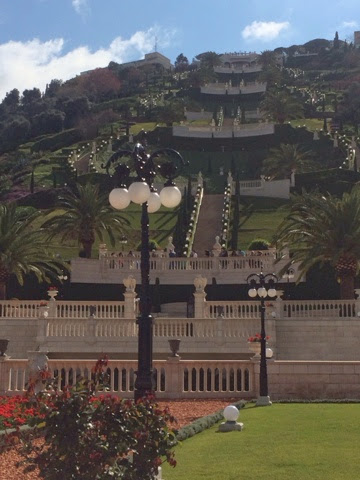
We went to the Bahai Gardens in Haifa, which I had never gone to before, but had heard how beautiful they are. The history about the Bahai religion and their up keep of the garden is fascinating.  Because the tour guide spoke Hebrew (extremely fast),  I got maybe a couple words in the whole time. Leslie and Gil translated the main idea of what he was saying though.  We climbed down 700 stairs, to the Bahai Gardens. The landscape was up kept so well. Once we got down we took a taxi back to the car.  

At the top

View of the whole garden from the top

Me and Yael

Me, Yael, Gil and Maya

Leslie, Yael, me, Maya and Gil

Star in the middle of the garden

The dome and part of the garden

All the stairs that we climbed down


Saturday, 15 March 2014

Diaspora museum


On Thursday we had a planned ICC class, to got to Tel Aviv and tour around the diaspora museum and Neve Tzedek.  It ended up being a very rainy day.  We still went to the diaspora museum, just not to Neve tzedek. The diaspora museum was very interesting, from the time of the times of 4,000 years ago.... to the modern days. 

Quote near the end of the exhibit


Synoguge in Alexandria, Egypt
Synagogue in Alexandria, Egypt


Synagogue in Cochin, India


One of the sections of the exhibit that I went to was one all about our personal history. They had computers set out in order for us to research our geneology. I was so excited to be able to do this, especially at a place like the 'Diaspora Museum', where the whole emphasis on the museum is on the history of the Jewish people and to connect people back to their roots. 

I got out all the family history documents that I had on my phone, and I typed in a bunch of different family last names. Last names that had been changed in the past, and that are still in the family. I found a bunch of results, not ones that I personally recognize, but I think my grandparents recognized some of them.  Everyone from my group was so excited about the chance to look up their family's history. Mainly because we are going to Poland in a few weeks, and we are preparing family history and names to bring with us to Poland.  Below are pictures that I took on all of the results that came up. 


Chodirker family
Kaplun family

On the way to the staircase on the second floor is a caged light that is pictured below. We were asked to fill in a sheet for our ICC class. One of the questions was 'what do you think this caged light symbolizes?'  After seeing all the tough times in our history, throughout the museum.  We often find a way to bring negativity into positivity. I think the caged light symbolizes that throughout all the tough times, there is a light at the end of the tunnel.  Something or someone is always looking out for us, after all the hardship. 

'Caged light' in the museum


Menorah at the end of the exhibit 

I felt that this museum had a great message. Although, they were very keen on advertising throughout the exhibition that all the Jewish people should be living in Israel to make the story complete.  In truth, the reason that we are such a unified and participatory religion and culture is because we are all spread out around the world. I think that this is an integral part of the Jewish religion. We will most likely always be spread out, but 

Israel will always be my (our) home and one that I (we) will always come back to!!